
Indoor Air Quality Insights
The air we breath matters just as much as the water we drink.
Key takeaways
Indoor Air Quality is an integral (and frequently overlooked) component of creating indoor environments that maximise and promote the health and wellbeing of all occupants.
The air we breathe
Over the course of a day, an average office worker at rest will breath approximately 15 times per minute, with each inhale moving 0.5L of air. Throughout an 8-hour working day, this equates to 3,600L or 4.3kg of air that enters our bodies, largely without a second thought.
We obsess over what we eat and drink, scrutinising nutritional labels, filtering our water, and debating the merits of various ingredients. Yet, the air we breathe comprises approximately 1.5x the amount of food and beverages we consume in a day. Unlike food and drinks, we have no instinctive filter for air; we cannot choose alternative sources for ethical or dietary reasons, nor do we pause and check that the air is being treated or filtered. For the most part, every pollutant present in the space around us, is delivered directly into our lungs and bloodstream.
What’s in the air?
The principal pollutant sources of concern in a modern commercial office include: Carbon Dioxide (CO₂), Total Volatile Organic Compounds (TVOCs), Nitrogen Dioxide (NO₂), Particulate Matter (PM2.5 and PM10). Increases in any of these are often linked to both short and long-term mental and cognitive impacts. Ranging from chronic fatigue, headaches and impaired decision making, to being known carcinogens, increasing susceptibility to infections and asthma, and increases in absenteeism.
The numbers in a typical office:
Carbon Dioxide: 800-1200ppm
TVOCs: 100 - 750µg/m³ (tends to be higher in new fitouts)
Nitrogen Dioxide: 22 - 25µg/m³
PM2.5: 10 - 25 µg/m³
While these figures are relatively small, consider that the lungs are designed for rapid and efficient absorption, and almost everything inhaled is processed into the bloodstream. When compared with outdoor air quality (e.g. Melbourne CBD), it is found that the indoor environment can be 2 - 3x more polluted than the outdoor environment.
Consider being given a glass of water and being told, “We’re not sure exactly what’s in it, but we do know that there are traces of industrial solvents, some combustion gases from the road outside, bacteria from the air-conditioning ducts and the CO₂ of 40 other people in this room. Enjoy!” We would not drink it, yet we breathe the equivalent every single day. Poor indoor air quality isn’t immediately lethal, but it can be cumulatively harmful and avoidable with the right measures in place.
The right measures
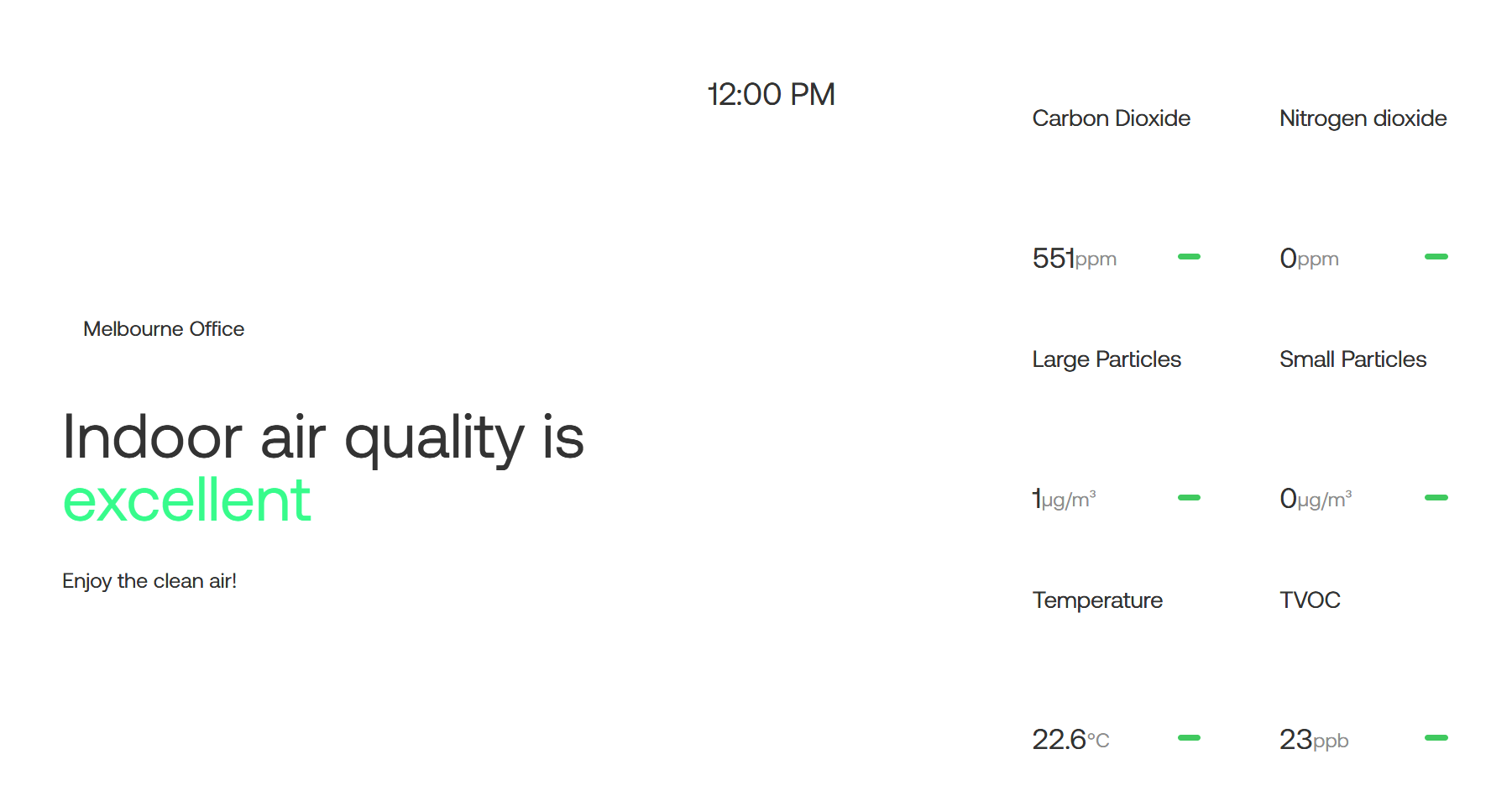
Measuring
Using some form of indoor air quality measurement is a vital step to optimising the indoor environment. Being able to see how a space is tracking in real-time allows for an active response to pollutant infiltration.
Planting
House and indoor plants have a measurable capacity to remove TVOCs, and other pollutants and represent an aesthetic and functional addition to all offices. Maintaining a high density (1 per 10m² of floor area) has demonstrable benefits in reducing the overall level of pollutants. In addition, planting also helps to promote higher levels of engagement and other qualitative metrics of employee satisfaction through increased levels of biophilia and connection to nature.
Ventilating
Increasing and maintaining high levels of outdoor air ventilation (meeting or exceeding ASHRAE 62.1) in tandem with plants and measuring capabilities demonstrates the best real-world performance. Maximising the amount of fresh air that can enter a space should always be considered as early as possible to ensure the space itself, and any supplementary measures taken, are able to work together to maximise benefit to occupants.
Where to from here
Improving Indoor Air Quality doesn’t require large-scale infrastructure change, and a combination of strategies, including continuous indoor air quality monitoring, targeted biophilic planting and low-VOC material specifications, can meaningfully improve the air quality in any occupied space, often without significant capital expenditure. High-quality indoor air quality must transition from a ‘nice-to-have’ to a baseline expectation that we measure, manage and report with the same rigour that we apply to the water we drink.
If you’d like to understand how this may apply to your building or project, our team would be glad to help work with you to build a healthier, higher-performing workspace.